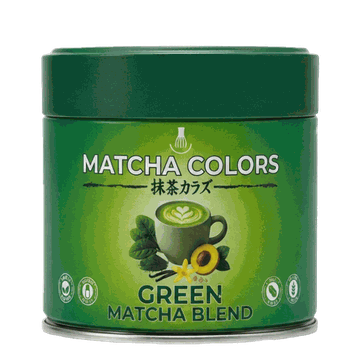
Green
The classic. Grassy, dense, with just the right bitterness.
- Base tea
- Japanese matcha (green tea)
- Where the colour comes from
- Chlorella and spinach


Matcha isn't a colour or a flavour: it's a way of drinking tea. The whole leaf, ground to a powder, whisked into water. We've taken that method and applied it to six different teas.

Matcha literally means “ground tea”. It doesn't name a plant or a colour: it names a method. That's why it has worked for over eight hundred years, and why it can be applied to any tea.

You put the leaf in water, wait, then throw the leaf away. You drink whatever the water managed to pull out of it.
The leaf is already powder. It doesn't steep: it dissolves. You drink the whole leaf, not its shadow.

For its final weeks the plant grows under cover. The leaf turns darker and more tender.

A burst of steam halts oxidation and locks in the colour of the leaf.

Stems and veins are removed. Only the tender part is left.

Ground extremely fine, into a powder that stays suspended in water instead of settling.

Oolong, yellow tea, black tea, pu-erh and white tea all come from the same plant as green: Camellia sinensis. What changes is how far the leaf oxidises. And with it, the colour and the flavour.
That's how the six were born. Each blend starts from a ground tea and adds real botanicals — flower, root, fruit or spice — for its colour. The tea sets the base; the botanicals bring the colour.
Green, white, yellow, oolong, black and pu-erh all come from one plant: Camellia sinensis. What separates them is how far the leaf is allowed to oxidise after picking. That's where each one's colour and flavour come from.
Pu-erh sits apart on purpose: it doesn't just oxidise, it ferments over time. That's a different process, so we keep it separate on the scale.
The classic. Grassy, dense, with just the right bitterness.
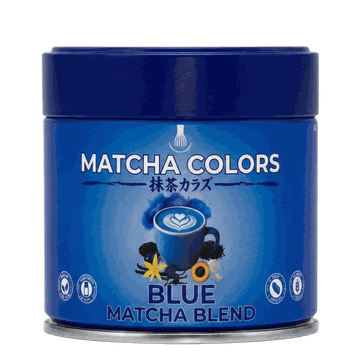
Soft and floral. The most improbable blue you'll fit in a cup.
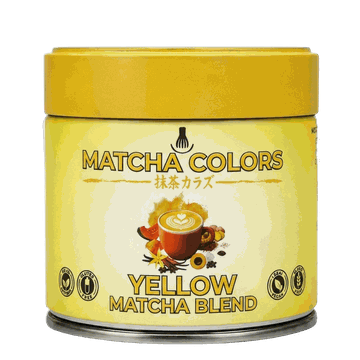
Warm and spiced, with cinnamon, cardamom and ginger.
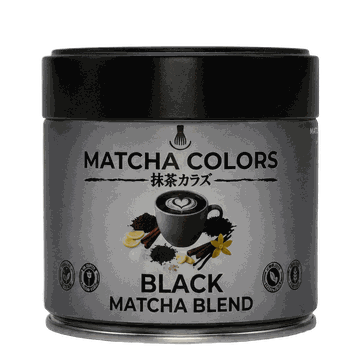
Deep and toasted. Properly black, not dark brown.
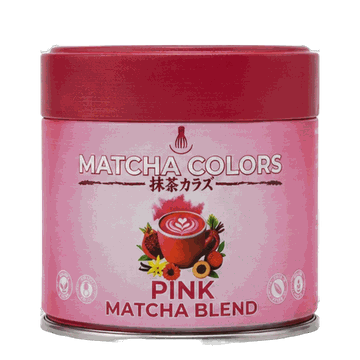
Earthy and fruity at once. The pink comes from the root.
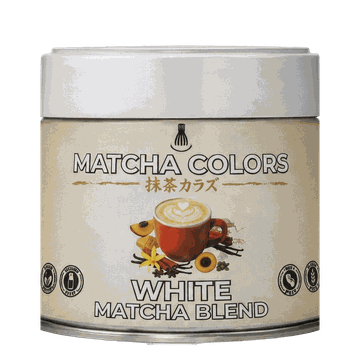
The most delicate. Creamy, with cinnamon and vanilla.
Green starts from Japanese green-tea matcha. The other five start from oolong, yellow tea, black tea, pu-erh and white tea.
Much of what is sold as “blue matcha” is ground butterfly pea flower and little else: pretty, but without a tea leaf in it. We always start from a tea. No tea, no matcha — just colour.
Matcha means “ground tea”, so all six are made by the same method: a ground tea whisked into water rather than steeped. Green starts from Japanese green-tea matcha; the other five start from oolong, yellow tea, black tea, pu-erh and white tea.
From real botanicals, never dyes: butterfly pea flower and spirulina for the blue, beetroot and pitaya for the pink, turmeric and pumpkin for the yellow, cacao and charcoal for the black.
No, and that's the point. Each base tea has its own character: pu-erh is earthy, oolong floral, white tea delicate. Only Green has the grassy profile of classic matcha.
No. None of the blends contain added sugars or additives. The sugars shown on the nutrition table are those naturally present in the fruit and vegetables.
One teaspoon (2 g) in 120 ml of water at around 80 °C. Whisk with a chasen until no lumps remain, then add 120 ml of whichever milk you prefer.
Six teas, six colours, one method.

