

From the Sakurajima Volcano to Your Cup: The Origin of Our Japanese Matcha Premium
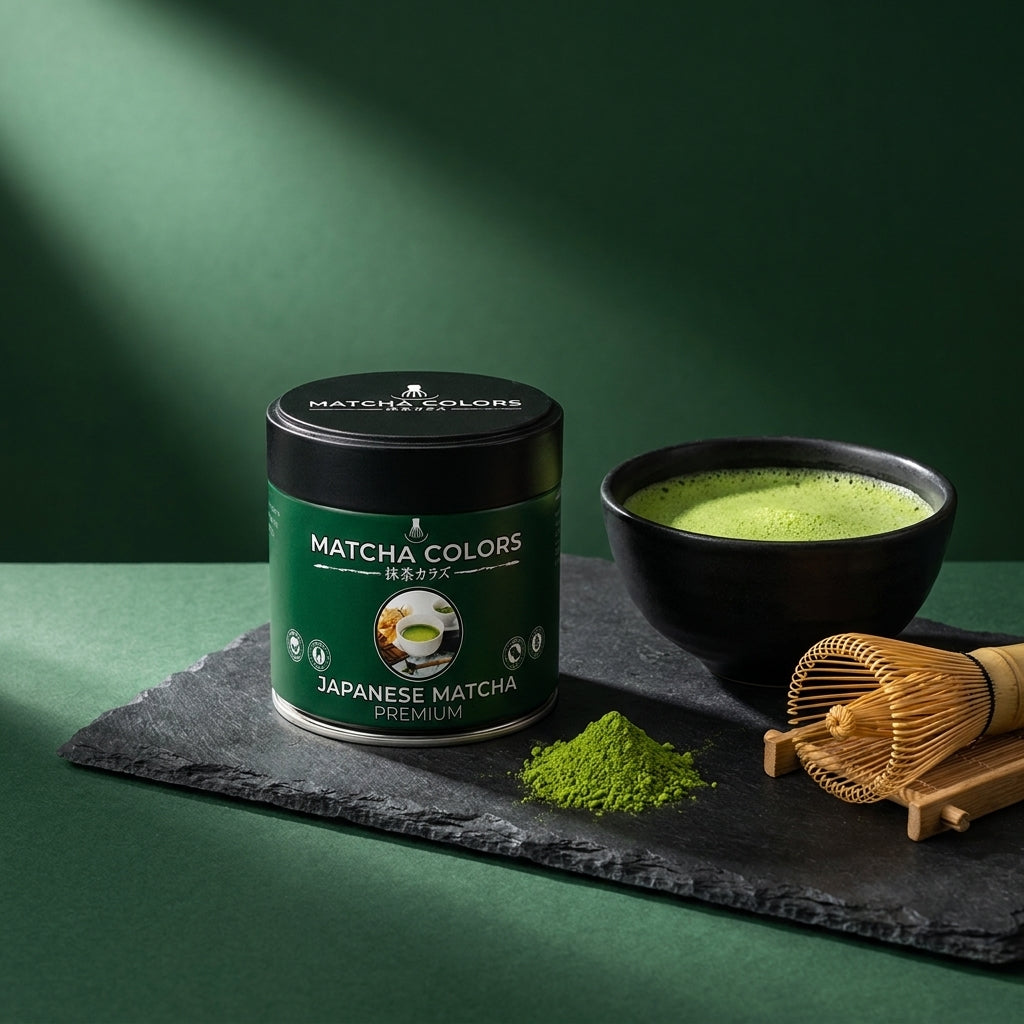
From the Sakurajima volcano to your cup: where our Japanese Matcha Premium comes from
Our Japanese Matcha Premium comes from a small family tea farm in Kagoshima, in the south of Japan, beside the Sakurajima volcano. It is shade-grown, processed as tencha and slowly ground in granite stone mills. Here is every step, and what each one brings to the colour and flavour of your cup.
What makes our Japanese matcha different?
- Shade-grown, which deepens the green and the umami.
- Leaf processed as tencha, with no stems or veins.
- Slow grinding in granite stone mills, which preserves colour and aroma.
- Grown in Kagoshima, on the volcanic soil of Sakurajima.
Why is it grown in shade?
A few weeks before harvest, the fields are covered with screens that cut sunlight by up to 90%. With less light, the plant produces more chlorophyll, which gives that intense green, and builds up more amino acids such as L-theanine, responsible for the smooth, slightly sweet flavour and the umami so typical of matcha. It is the technique that sets quality matcha apart from other powdered green teas.
From the field to tencha
After picking, the leaves are steamed for a few seconds to stop oxidation and keep them fresh. They are then air-dried and stripped of their stems and veins. What remains, the pure leaf destined for grinding, is called tencha. Only the finest tencha becomes a matcha like ours.
Ground in granite stone mills
The tencha is ground in granite stone mills, deliberately slowly: each mill produces just 30-40 grams of matcha an hour. That slowness stops the leaf from heating up, preserves its colour and aroma, and gives a very fine, silky powder that stays well suspended in water.
Kagoshima: a volcanic terroir
Kagoshima, at the far southern tip of Japan, has grown tea since the Edo period. Three features shape its tea:
- Volcanic soil formed from the ash of Sakurajima, one of Japan's most active volcanoes.
- A warm, humid climate, which allows early harvests.
- Frequent banks of mist, which shelter the leaves and keep them moist.
Less common cultivars such as Saemidori and Yutakamidori are grown there, softer and sweeter in profile than Yabukita, the most widely planted in Japan. Because it is a small farm, production is limited and every harvest is tended by hand.
What does it taste like?
Vivid green, a creamy texture and a balance of sweetness, umami and fresh vegetal notes, with a smooth finish. To taste it properly, make it with water only; in how to recognise a good matcha by its colour, aroma and taste we explain what to look out for.
Japanese matcha and Chinese matcha
China and Japan both have a long tradition of green tea, and their powdered teas reflect different methods and uses. Japanese matcha puts the emphasis on shade-growing, stone-grinding and a pronounced umami; the Chinese offering is vast and varied, with many powders intended for cooking and blending. We chose matcha from Kagoshima for its clear origin, its limited production and its silky profile. The full story of powdered tea in Asia is in the origins and evolution of powdered tea in Asia.
How to prepare it
For a traditional tea (usucha), whisk 2 g into 70-80 ml of water at 75-80 °C. For a mellow cup or a latte, 1 g in 120 ml of water, plus 120 ml of milk or a plant-based drink if you like. Step by step, in our guide to making matcha at home. As it is green tea, it contains caffeine: the figures are in matcha and caffeine.
Starting from scratch? Read what matcha is first.
Keep reading
- The matcha ritual: its history and how to prepare it step by step
- Matcha vs hojicha: differences in flavour, colour and caffeine
- Hojicha and genmaicha, matcha's toasted cousins
- Matcha, hojicha and genmaicha compared
Try it at home
The products mentioned in this article: Japanese Matcha Premium

