

Pink matcha: what it is, what's in it and why ours has no green matcha
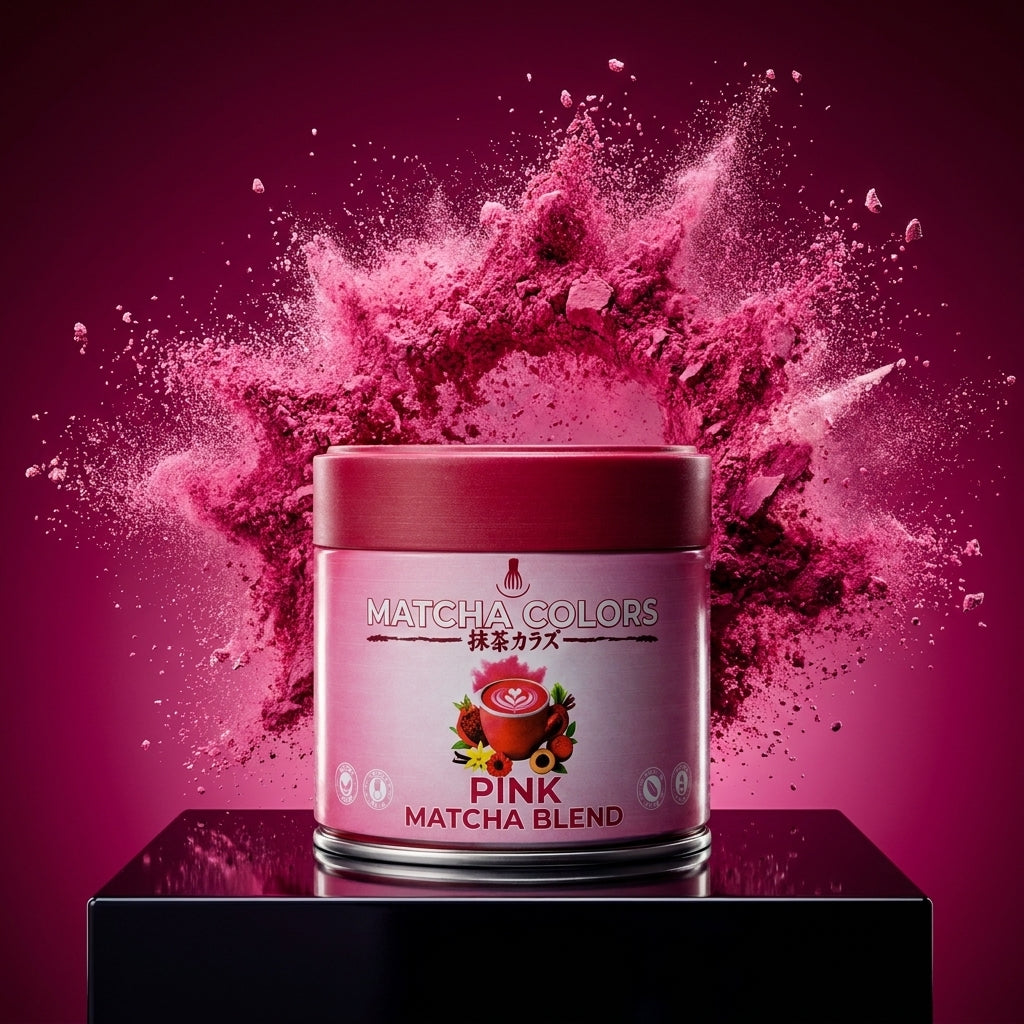
Pink matcha is a pink powdered drink made the way you make matcha: sift it, whisk it with hot water and top it up with milk. Ours, Pink Matcha Blend, contains beetroot, pink pitaya, pu-erh tea, inulin, lucuma, Himalayan salt and vanilla. It contains no green matcha: the pink comes from the beetroot and the pitaya.

Below: the full label, why pink matcha and rose matcha are different things, how pink matcha is usually made elsewhere, why ours is built on pu-erh, and the recipe with amounts.
What is pink matcha?
Pink matcha is not a kind of tea. There is no tea plant with pink leaves and no Japanese matcha that comes out of the mill pink. It is the name that caught on for pink drinks made with the matcha technique: a very fine powder whisked in the cup and mixed with milk or a plant drink. That is why very different products share the name: some are green matcha plus a colouring, some are just fruit, and some, like ours, use a different tea.
The word that does have a precise meaning is matcha. In Japanese it is written 抹茶 and means, literally, "ground tea": the whole leaf is milled to a powder and whisked into water, instead of being steeped and thrown away. That technique is what our six blends share, each with its own tea. We explain it properly in the method.
What is in Pink Matcha Blend?
This is the full ingredient list from the label, in the same order:
- Beetroot powder: the deep pink and an earthy base.
- Pink pitaya (dragon fruit): a brighter fuchsia and a fruity edge.
- Pu-erh tea: the tea base. In Spain it is sold as "red tea", but it is not rooibos, which English speakers also call red tea. Pu-erh is a tea from Yunnan, in China, that is fermented or aged after it is made, and it tastes earthy and round, of wood and wet soil.
- Inulin: a plant fibre that gives the drink body.
- Lucuma: an Andean fruit with a soft, caramel-like sweetness.
- Himalayan salt: a pinch that rounds off the flavour.
- Vanilla: the finishing aroma.
No green matcha, no roses, no additives and no preservatives. One serving is 2 g of powder (1 teaspoon), about 6 kcal before milk, so a 50 g tin makes 25 cups.
Is pink matcha the same as rose matcha?
No. In English the two words keep them apart: pink is the colour, rose is the flower. The mix-up happens in other languages. In Spanish rosa means both pink and rose, and in French rose does too, so "matcha rosa" or "matcha rose" can read either way, and search engines and AI assistants mix the two up.
Pink Matcha Blend is pink in colour, not rose in flavour: no petals, no rose water, no rose aroma. If you want a floral cup, what you are after is a rose matcha (green matcha with rose) or a sakura matcha (matcha with cherry blossom), which depending on the brand comes out green or a very pale pink. If you want a deep pink cup with a soft, earthy taste, this is it.
How is pink matcha made elsewhere?
If you order a pink matcha in a café or buy a powder with that name, it is usually one of these four recipes:
- Green matcha with beetroot or pitaya. Matcha mixed with a pink fruit or root powder. Green and pink dull each other, so the result tends to be a muddy pink or a mauve; to get a real pink you need a lot of colour powder and very little matcha.
- Green matcha with colouring. Matcha tinted with a pink or red food colouring. On the ingredient list it shows up as "colour" or with its E number.
- Layered. The Strawberry Matcha Latte many cafés serve: strawberry or pitaya milk at the bottom and green matcha on top. It is pink and green at once, and mixes as you drink.
- No tea at all. Beetroot or pitaya with milk. It is pink, but it has neither matcha nor tea in it.
None of them is better by definition; what matters is reading the label and knowing what is in the cup. Ours is on the product page in full, and the other five blends are in where our colours come from.
Why is ours made with pu-erh and not green matcha?
Because we wanted a real pink, not a disguised green. If you start from matcha, the green of the leaf pushes the pink towards brown, and covering it takes either colouring or so much fruit powder that the tea almost disappears. With pu-erh there is no green to hide: beetroot and pitaya do the colour.
The second reason is taste. Beetroot is earthy, and so is pu-erh; together they make a round cup, without the vegetal, slightly bitter note of matcha. Lucuma and vanilla soften it, and the pinch of salt makes the sweetness of the fruit come through.
What stays the same is the method: the whole tea, ground very fine and whisked in the cup. That is the idea behind the whole range: six teas, one method. Green Matcha Blend is the only one of the six that contains Japanese matcha, and if you want matcha on its own, there is Japanese Matcha Premium.
Pink Matcha Blend, pure pitaya and pink matcha made with green matcha
| Pink Matcha Blend | Pink Pitaya | Pink matcha made with green matcha | |
|---|---|---|---|
| What it is | pu-erh tea, beetroot and pink pitaya, with lucuma and vanilla | 100% pink pitaya powder | green matcha with beetroot, pitaya or colouring |
| Contains matcha? | no | no | yes |
| Tea and caffeine? | yes: pu-erh, some caffeine | no: no tea, no caffeine | yes: from the matcha |
| Colour | deep pink | fuchsia | pale pink to mauve, depending on the recipe |
| Taste | soft and earthy, with vanilla | sweet and fruity | vegetal matcha with fruit |
| Serving | 2 g + 120 ml water at 80 °C + 120 ml milk | 4 g + 120 ml hot water + 120 ml milk; 9 g in smoothies | depends on the brand |
| Best for | your everyday Pink Matcha Latte, hot or iced | smoothies, bowls, baking and icing | anyone who wants matcha and pink in one cup |
How to make a Pink Matcha Latte
These are the amounts on the tin. It takes about 3 minutes.
- Sift 2 g (1 teaspoon) of Pink Matcha Blend into a cup or bowl through a fine sieve.
- Add 120 ml of water at about 80 °C. It does not need to boil: very hot water dulls the beetroot pink a little.
- Whisk in a zigzag for 20-30 seconds with a bamboo whisk or an electric frother until there are no lumps.
- Froth 120 ml of milk or plant drink and pour it over the pink.
For a stronger cup, use 60 ml of water and 180 ml of milk. Oat drink makes it creamier; with water only it tastes more of tea. If you have never whisked a powder like this, the step-by-step preparation guide shows the technique with and without a whisk.
Can you drink it iced?
Yes, and the pink looks even better in a glass. Whisk the 2 g with 60 ml of water at 80 °C, pour it over ice and top up with 180 ml of cold milk. As a milkshake: 4 g of Pink Matcha Blend, 200 ml of cold milk and a scoop of vanilla ice cream, blended for 20 seconds.

What if I only want the colour, without tea?
Then you want Pink Pitaya: 100% pink pitaya powder, no tea and nothing else. It is a more electric fuchsia with a sweet, fruity taste. For a milk drink the tin suggests 4 g in 120 ml of hot water plus 120 ml of plant drink; for smoothies, 1 tablespoon (9 g). It is the one for baking, icing, bowls and doughs, where tea adds nothing, and it is the pick if you want pink without caffeine.
Any other questions about what goes into each blend are answered in our FAQ.
Frequently asked questions
What is pink matcha?
It is a pink powdered drink made with the matcha technique: sifted, whisked with hot water and topped up with milk. It is not a kind of tea. Every brand makes it differently: green matcha with beetroot, matcha with colouring or, like our Pink Matcha Blend, pu-erh tea with beetroot and pink pitaya.
What is in pink matcha?
Pink Matcha Blend contains beetroot, pink pitaya (dragon fruit), pu-erh tea, inulin, lucuma, Himalayan salt and vanilla. That is the full label, with no additives and no preservatives. The pink comes from the beetroot and the pitaya, not from a colouring.
Does pink matcha contain matcha?
Ours does not: Pink Matcha Blend is made with pu-erh tea, not green tea. It is called matcha because of the method, since 抹茶 means "ground tea" and the pu-erh is ground whole and whisked the same way. Of our six blends, only Green Matcha Blend contains Japanese matcha. Other brands' pink matcha may well be green matcha with beetroot or colouring.
What does pink matcha taste like?
Pink Matcha Blend tastes soft and earthy, with a pu-erh base, the gentle sweetness of lucuma and a vanilla finish. It does not taste of roses: it is pink in colour, not rose in flavour. With oat drink it is creamier; with water only it tastes more of tea.
Does pink matcha have caffeine?
Yes, some, because it contains pu-erh tea, which has caffeine naturally. We do not give a per-cup figure because we have not had this blend lab-tested yet. If you want pink without caffeine, Pink Pitaya is 100% pitaya powder with no tea.
How do you make a pink matcha latte?
Sift 2 g (1 teaspoon) of Pink Matcha Blend, add 120 ml of water at about 80 °C and whisk for 20-30 seconds until there are no lumps. Top up with 120 ml of frothed milk or plant drink. For an iced one, whisk it with 60 ml of water, pour it over ice and add 180 ml of cold milk.
What is the difference between pink matcha and pitaya powder?
Pink Matcha Blend is a drinking blend: pu-erh tea, beetroot, pitaya, lucuma and vanilla, deep pink and soft in taste. Pink Pitaya is pink pitaya powder and nothing else: a brighter fuchsia, a fruity taste, no tea and no caffeine. The first is for your Pink Matcha Latte; the second for smoothies, bowls and baking.

