

Matcha and Caffeine: What Is Actually in Your Cup
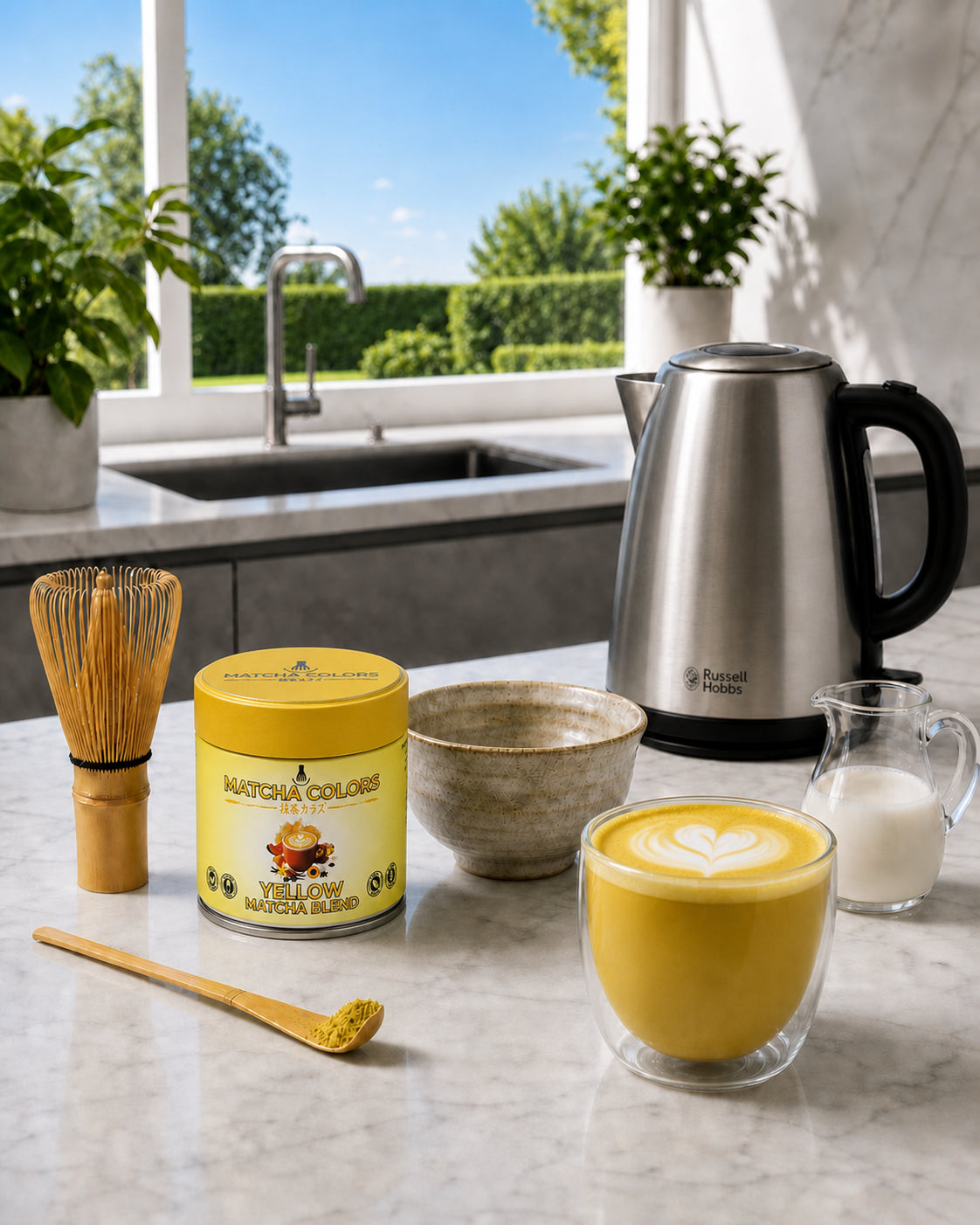
A 2 g serving of pure Japanese matcha contains, according to published analyses, somewhere between about 38 and 89 mg of caffeine. A 60 ml espresso has about 80 mg. At Matcha Colors we have not had the caffeine in our batches measured in a laboratory, and our labels do not declare it, so here is what we do know for certain: which products contain tea (and therefore caffeine), which contain none at all, and the published figures to compare them with.
Where does the caffeine in your cup come from?
In our range, caffeine can only come from two ingredients: the tea leaf (Camellia sinensis, the plant that gives us matcha, green tea, oolong, black tea, pu-erh, white tea and yellow tea) and cocoa. Fruit, vegetables, spices, rooibos, spirulina, ube and flowers contain no caffeine.
A detail many people don't know: of our six colour blends, only the Green contains matcha. The other five are made with other teas: blue oolong in the Blue, pu-erh in the Pink, yellow tea in the Yellow, black tea in the Black and white tea in the White. They share the matcha method (whole leaf, ground and whisked), but each owes its caffeine to its own tea.
How much caffeine is in matcha?
A 2020 study that analysed several commercial matchas found between 18.9 and 44.4 mg of caffeine per gram of powder (Koláčková et al., Plant Foods for Human Nutrition; the same figure appears in the review by Kochman et al. in Molecules, 2020). The range is wide because it depends on the harvest, the age of the leaf and the grade.
- 1 g (the serving on the label of our Japanese Matcha Premium, for a mellow cup or a latte): about 19-44 mg.
- 2 g (a traditional matcha or usucha, as in our step-by-step guide to making matcha): about 38-89 mg.
These are ranges from the literature, not a measurement of our matcha. If we ever have our batches analysed, we will put the figure here.
Matcha, coffee and tea compared
For coffee and tea we use the reference amounts from the European Food Safety Authority (EFSA), taken from its 2015 opinion on caffeine.
| Drink | Amount | Approximate caffeine | Source |
|---|---|---|---|
| Espresso | 60 ml | 80 mg | EFSA |
| Filter coffee | 200 ml | 90 mg | EFSA |
| Cup of tea | 220 ml | 50 mg | EFSA |
| Pure matcha, mellow serving | 1 g of powder | 19-44 mg | Koláčková et al., 2020 |
| Pure matcha, usucha | 2 g of powder | 38-89 mg | Koláčková et al., 2020 |
Why is matcha so close to coffee? Because it isn't steeped: you drink the whole ground leaf. With brewed tea, some of the caffeine stays in the leaves you throw away; with matcha nothing is thrown away. We go into more detail in what matcha is and how it differs from green tea.
Product by product: which ones contain caffeine?
The serving is the one stated on each product's label. Where we don't have a figure of our own, we say so.
| Product | Where the caffeine comes from | Label serving | Caffeine |
|---|---|---|---|
| Japanese Matcha Premium | Japanese matcha (100%) | 1 g | Yes. Published range for matcha: 19-44 mg per gram. Not measured by us |
| Green Matcha Blend | Japanese matcha | 2 g | Yes. Less than 2 g of pure matcha, because matcha is one of several ingredients. No figure of our own |
| Blue Matcha Blend | Blue oolong tea | 2 g | Yes. No figure of our own |
| Pink Matcha Blend | Pu-erh tea | 2 g | Yes. No figure of our own |
| Yellow Matcha Blend | Yellow tea | 2 g | Yes. No figure of our own |
| Black Matcha Blend | Black tea and defatted cocoa | 2 g | Yes. No figure of our own |
| White Matcha Blend | White tea | 2 g | Yes. No figure of our own |
| Hojicha | Roasted Japanese green tea | 2 g | Yes. No figure of our own |
| Genmaicha | Green tea (the toasted rice adds no caffeine) | 1 g | Yes. No figure of our own |
| Masala Chai and Vanilla Chai | Black tea | 2 g | Yes. No figure of our own |
| Choco Chai | Defatted cocoa and black tea | 4 g | Yes. No figure of our own |
| Masala Chai Caffeine Free | None: the base is rooibos | 2 g | Caffeine-free |
| Rooibos Premium and Rooibos Vanilla | None | 1 g | Caffeine-free |
| Japanese Ube | None: purple sweet potato | - | Caffeine-free |
| Pink pitaya | None: fruit | 4 g | Caffeine-free |
| Blue spirulina | None: algae pigment | 2 g | Caffeine-free |
| Butterfly pea flower powder | None: flower | 0.5 g | Caffeine-free |
How much caffeine is in the colour blends?
We don't have a laboratory analysis of each blend, so we are not going to make up a number. What we can say from the recipe:
- In all six blends, tea is one of several ingredients, alongside fruit, vegetables, spices, inulin and lucuma. A 2 g teaspoon therefore contains a good deal less tea than 2 g of pure tea, and less caffeine than the same teaspoon of an unblended tea.
- The Green is the only one with matcha. The others owe their caffeine to oolong, pu-erh, yellow tea, black tea or white tea, and caffeine content varies from one tea to another and from one harvest to the next.
- The Black also contains defatted cocoa, which naturally contains a little caffeine.
If you want to know where their colours come from, we explain it in where our blue, pink, yellow and black come from.
What if I don't want caffeine?
You have five options with no tea at all: rooibos (also in a vanilla version), the caffeine-free Masala Chai, which puts chai spices on a rooibos base, pink pitaya, blue spirulina and ube. If rooibos appeals, here is what rooibos is and how to prepare it.
A word of caution about hojicha: it is often recommended "for the afternoon" because its toasted flavour is mellow, but it is green tea and it does contain caffeine. We don't present it as low in caffeine because we have no measurement to back that up. The differences in flavour between the two are in matcha vs hojicha.
How much caffeine a day is considered safe?
According to EFSA, for healthy adults single doses of up to 200 mg and intakes of up to 400 mg spread over the day do not raise safety concerns. During pregnancy and breastfeeding, the limit it gives is 200 mg a day, and for children and adolescents it suggests 3 mg per kilo of body weight a day. If you are pregnant or have questions about how much you consume, speak to your healthcare professional.
Frequently asked questions
Does matcha have more caffeine than coffee?
It depends on the amount. A 2 g serving of pure matcha has about 38-89 mg according to published analyses, and a 60 ml espresso about 80 mg according to EFSA. With 1 g, as in a mellow latte, matcha comes in clearly below a coffee.
How much caffeine is in the Green Matcha Blend?
We don't have a laboratory figure. It contains Japanese matcha, which is its only source of caffeine, but blended with other ingredients, so a 2 g teaspoon has less caffeine than 2 g of pure matcha.
Do the Blue, Pink, Yellow, Black and White blends contain matcha?
No. They contain blue oolong, pu-erh, yellow tea, black tea and white tea respectively. They all contain caffeine, which comes from that tea. Only the Green contains matcha.
Does hojicha contain caffeine?
Yes. Hojicha is roasted green tea and keeps its caffeine. Its flavour is gentler than matcha's, but it is not a caffeine-free drink. If you want zero caffeine, choose rooibos or Masala Chai Caffeine Free.
Which Matcha Colors products are caffeine-free?
Rooibos Premium, Rooibos Vanilla, Masala Chai Caffeine Free, Japanese Ube, pink pitaya, blue spirulina, butterfly pea flower and the edible petals. None of them contains tea or cocoa.
Sources: EFSA, "Scientific Opinion on the safety of caffeine", EFSA Journal 2015;13(5):4102. Koláčková T. et al., Plant Foods for Human Nutrition 2020;75:48-53. Kochman J. et al., Molecules 2020;26(1):85. Composition and servings: the label of each product.

