

What Is Matcha? The Complete Guide to Stone-Ground Green Tea
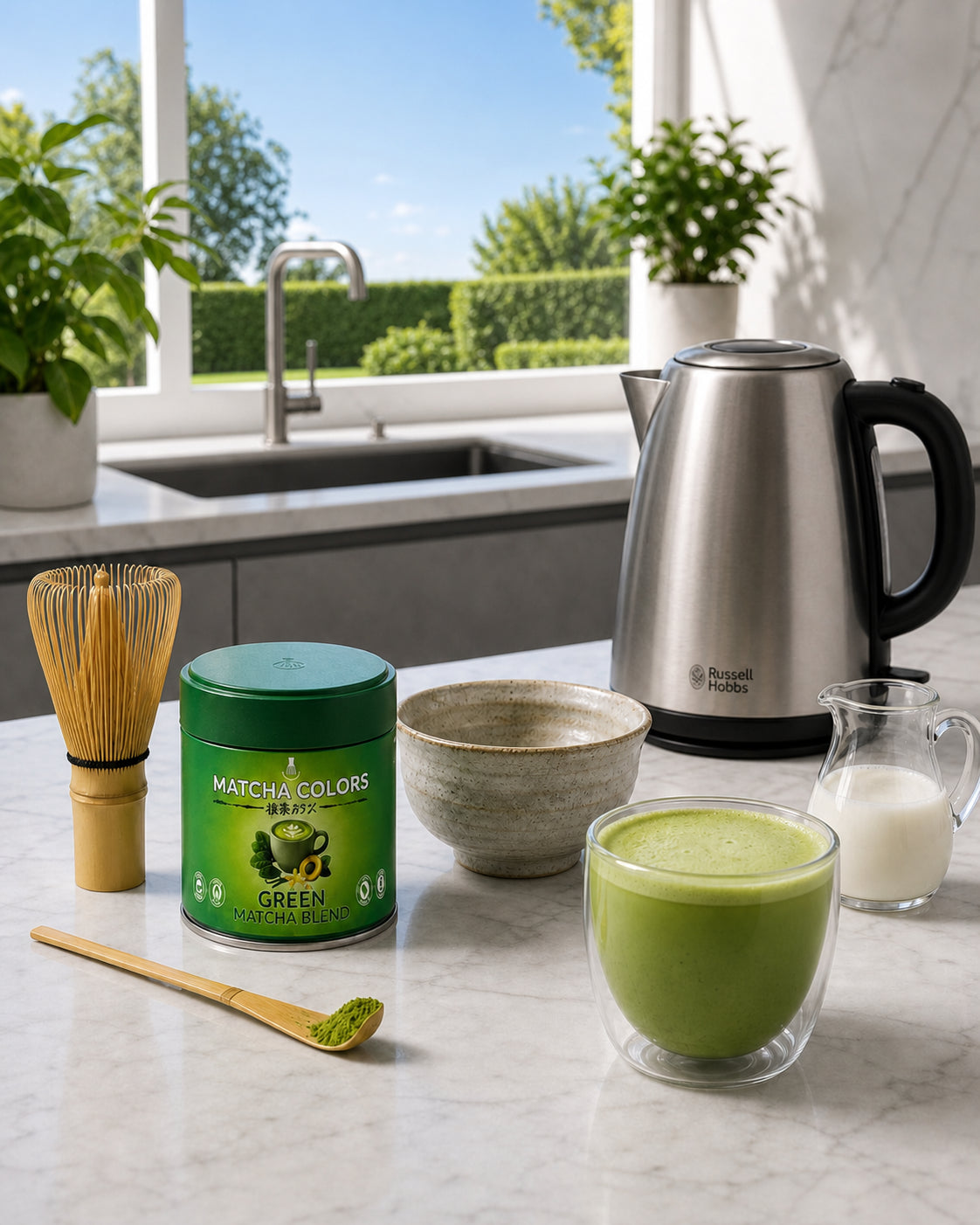
Matcha is Japanese green tea, stone-ground into an extremely fine powder. The big difference from any other tea: you don't steep it and throw the leaf away, you drink the whole leaf, whisked into water, with all its colour and flavour. In Japanese, 抹茶 literally means "ground tea".
Where does matcha come from?
Whisked powdered tea was born in China under the Song dynasty (10th-13th centuries). At the end of the 12th century, the monk Eisai brought tea seeds and the custom of whisking tea to Japan, where the practice survived and was refined into the tea ceremony. Today the major matcha-producing regions are in Japan: Uji (Kyoto), Nishio (Aichi) and Kagoshima, in the south. We tell the story in more detail in the origins and evolution of powdered tea in Asia.
How is matcha made?
- Shade: a few weeks before harvest, the plants are covered to cut out light. They produce more chlorophyll, hence the electric green, and more L-theanine, the amino acid linked to umami flavour.
- Steam: the freshly picked leaves are steamed to stop oxidation.
- Tencha: they are dried and their stems and veins removed. That clean leaf is called tencha.
- Stone: the tencha is slowly ground in stone mills, at about 30-40 g an hour, into a very fine powder.
What does "ceremonial grade" mean?
It is used for matcha from the first harvests, made from young leaves, finely ground and vividly green, intended to be drunk on its own with water. It is worth knowing that it is not an official category: no Japanese or European standard defines it, and every brand uses it in its own way. The most common names:
| Usual name | What it is used for | What it is like |
|---|---|---|
| Ceremonial / premium | Drinking on its own, with water | Deep green, sweet, umami, soft bitterness |
| Daily / latte | With milk or a plant-based drink | Slightly more intense, holds up well to milk |
| Culinary | Baking and cooking | More bitter and less vivid in colour |
Looking at colour, aroma and flavour is more useful than the label. We explain how in how to recognise a quality matcha.
Matcha vs brewed green tea
| Matcha | Brewed green tea | |
|---|---|---|
| Format | Whole ground leaf, whisked into the water | Leaf that is steeped and removed |
| Growing | Shaded before harvest | Usually in full sun |
| Flavour | Umami, body and creaminess | Lighter and more grassy |
| Preparation | Water at 75-80 °C, whisked | Steeped for 2-3 minutes |
| Caffeine | All of the leaf's, because you drink it | Only what passes into the water |
The caffeine figures, compared with coffee, are in matcha and caffeine: what is in your cup.
And matcha's cousins?
Hojicha is roasted Japanese green tea, with caramel notes, and it also contains caffeine. Genmaicha is made with toasted rice and tastes of popcorn. Both are prepared just like matcha. The differences are in matcha vs hojicha.
Matcha at Matcha Colors
- Our pure matcha is the Japanese Matcha Premium: 100% Japanese matcha from Kagoshima, shade-grown and stone-ground. Its story is in from the Sakurajima volcano to your cup.
- The Green Matcha Blend is Japanese matcha with chlorella and spinach. It is the only one of our six colour blends that contains matcha.
- The other five blends apply the same method, whole leaf ground and whisked, to other teas: blue oolong, pu-erh, yellow tea, black tea and white tea.
To prepare it, follow our step-by-step guide to making matcha at home.
Frequently asked questions
Is matcha the same as green tea?
It comes from the same plant, but it isn't the same thing. Matcha is shade-grown, processed as tencha and stone-ground, and you drink the whole leaf. Ordinary green tea is steeped and the leaf thrown away.
What does "matcha" mean?
In Japanese, 抹茶 means "ground tea". It refers to powdered green tea whisked into water, not to just any coloured powder.
Is ceremonial grade an official category?
No. It is a commercial term with no standard defining it. To choose, look at the colour, the aroma, the fineness of the powder and the origin.
Do all Matcha Colors blends contain matcha?
No. Only the Green contains Japanese matcha. Blue, Pink, Yellow, Black and White are made with blue oolong, pu-erh, yellow tea, black tea and white tea, prepared with the same method.

